Is Jeju Just Oreum and Black Pork? The Real Forest Is at Bijarim
a forest trail for slow walking
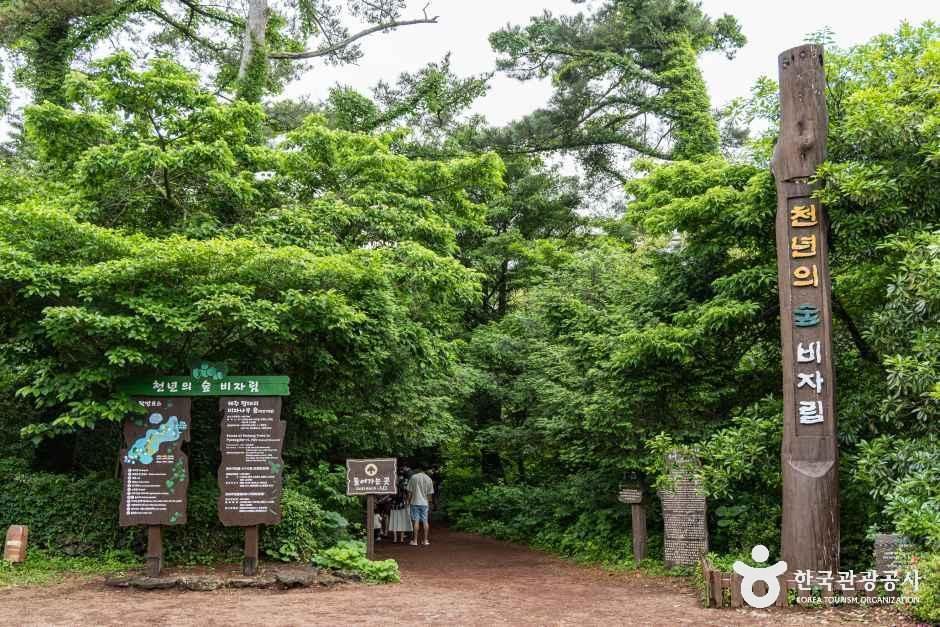
When you're putting together a Jeju itinerary, oreum hikes and black-pork restaurants tend to come up first. But on a day when you just want to walk quietly, people often say there's no place quite like Bijarim. Tucked away in Gujwa-eup, Jeju City, this forest is known for its grove of nutmeg yew trees (bija-namu) that have reportedly grown here for a very long time. Nutmeg yew is an evergreen that never sheds its leaves, and the trees in this forest are said to have each lived through a considerable stretch of years. That said, exactly how old they are, or exactly how many trees make up the grove, tends to vary depending on the source, so I won't pin it down to a specific number here. What visitors do consistently mention is that the air feels different the moment you step into this forest, compared to other oreum or tourist spots.
Why a Forest of Nutmeg Yew, Specifically?
Nutmeg yew is known as an evergreen that never drops its leaves through the year. Because of this, the forest reportedly keeps its deep green color no matter the season, and unlike deciduous forests, its overall look doesn't change much even in the dead of winter — a trait often pointed out as distinctive. These trees are said to have grown together in this one spot over a very long stretch of time to form the grove you see today, and the marks of those years are said to show clearly in each individual trunk. Looking up at the thick, rough bark and branches so dense they block out the sky, many visitors say it's hard to even guess how long this forest has endured. It's hard to pin an exact age on it with any number, but people say that once you actually walk through it, the phrase 'old-growth forest' doesn't feel like an exaggeration at all.
Walking Here Means Volcanic Scoria Trails
Another thing worth noticing at Bijarim is the feel of the trail underfoot. Reddish volcanic scoria — the crumbled volcanic gravel you see all over Jeju — reportedly lines the dirt path all the way into the forest, and instead of hard concrete paving, many visitors describe a soft, slightly yielding feel with every step. These trails are said to stay mostly flat, without steep climbs or heavy stretches of stairs, making for a completely different walking experience from an oreum hike that calls for hiking boots and a bit of resolve. It's often introduced as a trail that's manageable for families walking with kids or for older visitors, and one that even people who don't usually enjoy trekking can walk comfortably. That doesn't mean the forest itself is dull just because the path is flat, though. Thick tree trunks line both sides of the trail, and overhead, tangled branches cast shade the whole way, so there's said to always be something to look at as you walk.
I don't know exactly how old these trees are, but standing beneath them, it feels like time moves differently.
— 🍊 GYULISome say Bijarim doesn't change much no matter what time of day you visit, but many visitors report that the light filtering through the trees looks especially beautiful in the early morning or late afternoon, when the sun sits low. Thanks to the dense canopy, the inside of the forest is said to stay noticeably cooler than outside even in midsummer, and on days with light rain, the forest's distinct scent and damp air are said to add their own kind of charm rather than detract from it. The scoria-covered dirt path is also said to absorb rainwater rather than pool it, so it apparently doesn't get much harder to walk after rain than other forest trails. Unlike famous tourist spots crowded with tour buses, Bijarim has a reputation as a place where your walking pace naturally slows down on its own. Rather than rushing toward a destination, many travelers say that if you walk while taking in each individual tree, you find yourself at the end of the forest before you know it.
An Easy Trip Without Much Fuss
What's nice about Bijarim is that you don't need any elaborate preparation to visit. It's not like an oreum where you have to push through an uphill climb to the summit, and it's not as weather-dependent as a coastline or beach, so it's often counted as an easy addition to slot into a day of your Jeju itinerary. Comfortable shoes are really all you need, and not having to pack hiking gear takes some of the pressure off too. That said, the forest is fairly spacious, so walking the whole loop can reportedly take longer than expected — it's worth not packing your next plans too tightly. I'd recommend bringing a bottle of water and building in enough time for photos as you go.
GYULI's Tip · Bijarim's trail is fairly flat, but the forest is spacious enough that walking the full loop can reportedly take a fair amount of time. Don't pack your next plans too tightly — just bring comfortable shoes and a bottle of water, and take your time.