They Say a Bride Fell From This Rock — Did You Know This Oreum Exists?
Stand at the summit and Seogwipo's coast opens up before you
Today GYULI would like to introduce 'Gaksibawi Oreum,' located in Hogeun-dong, Seogwipo. This oreum, whose name already hints at a story, is said to be a parasitic volcano formed by volcanic activity, with a crater shaped like a cone, according to tradition. It's said to have gotten its name, Gaksibawi Oreum, from a rock called 'Gaksibawi' at its summit. Today, let's take a slow look at the story behind this oreum and the scenery you can meet there.
Where Does the Name 'Gaksibawi' Come From?
Gaksibawi Oreum is also said to be called Gaksuak in Hanja, and it's said to sometimes be called Haksuak as well, since it's said to resemble the wingbeat of a crane. So this single oreum is said to carry several names passed down together, but among them, the most widely known name is still Gaksibawi Oreum, taken from the rock at its summit.
The name 'Gaksibawi' is said to carry a legend of a virtuous bride (yeollyeo) who fell from this rock and died. Exactly what circumstances led to that event isn't said to be passed down in detail, but it's striking that the story still remains today, carried on in the rock's name. Standing before the summit rock while climbing, you might find yourself recalling that old story handed down through the years.
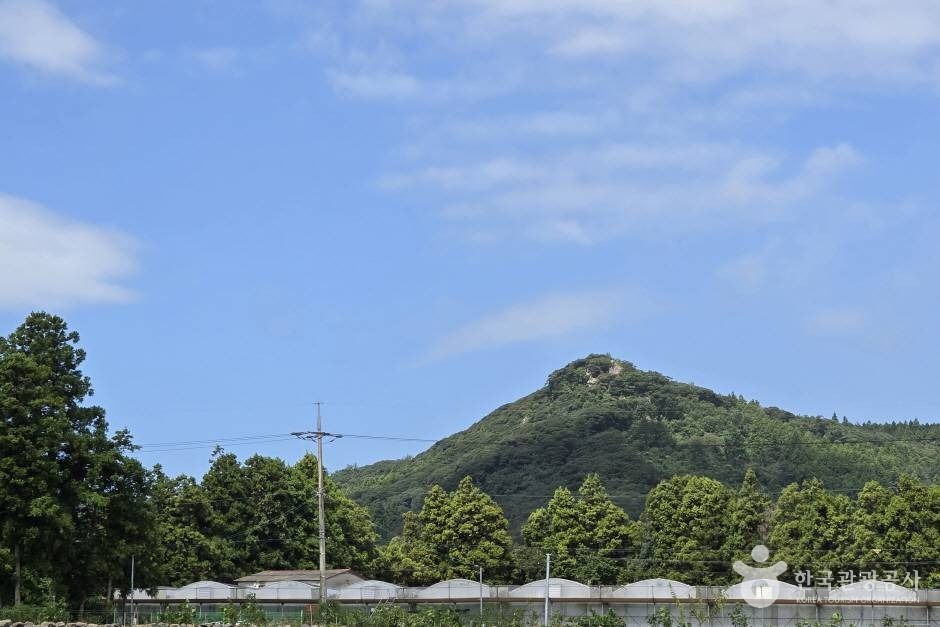
Isn't it remarkable that a single rock carries a name, and along with it, a whole story? Every time I climb this oreum, that story keeps coming back to mind.
— 🍊 GYULIA Gentle North Side and a Steep South Side — Two Different Faces of One Oreum
Gaksibawi Oreum is said to look quite different depending on whether you're on its north or south side. The north-facing slope is said to be gentle and thickly forested, while the south-facing ridge is said to be very steep. The south ridge is said to look as though three separate ridgelines stretch out from it, which makes it interesting that a single oreum can show such different expressions depending on the direction you approach from.
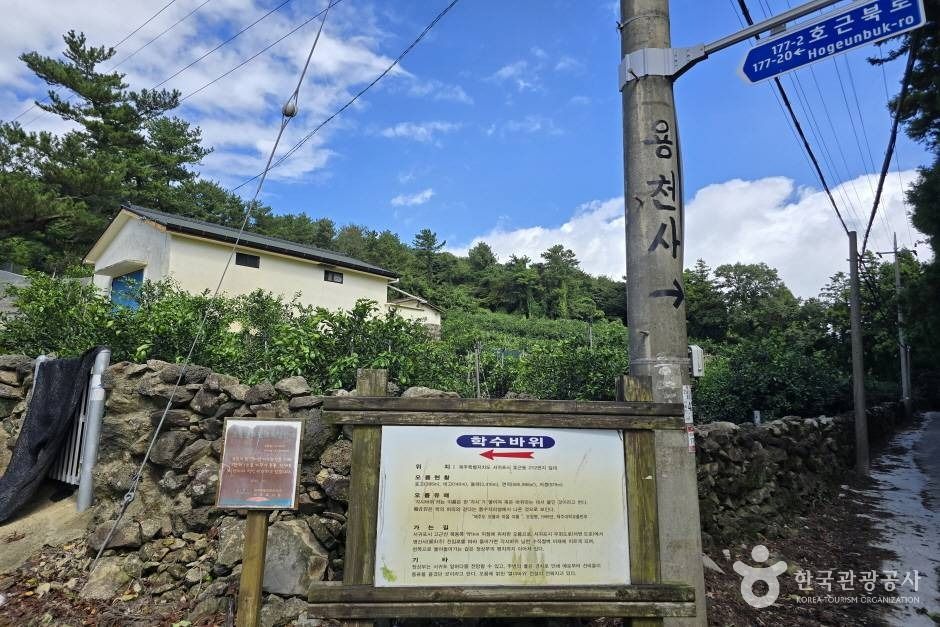
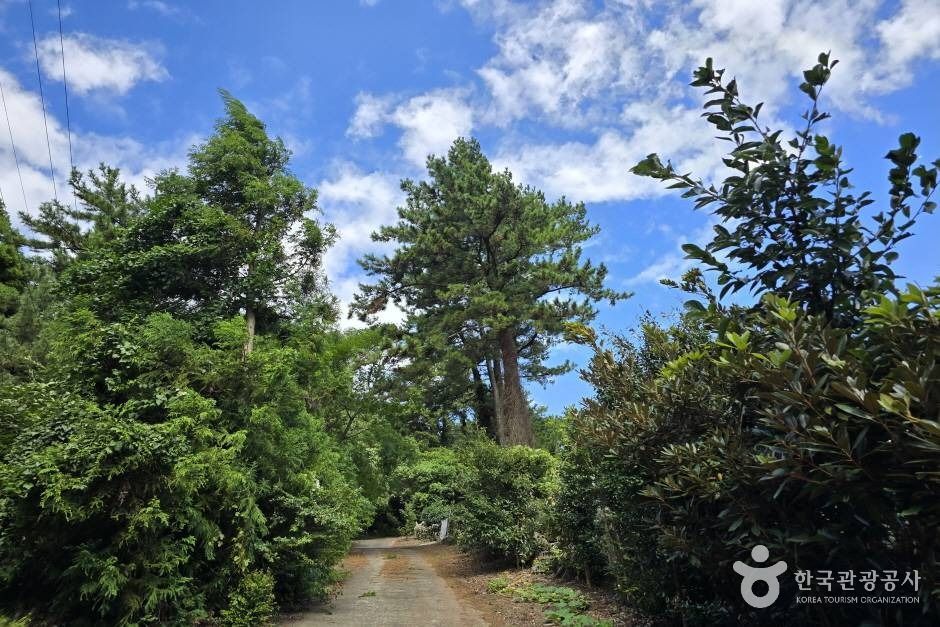
Just below the south-facing slope, there's said to be a hiking trail that climbs up behind Yeongsansa Temple. Stones with a trachyte texture are said to be scattered along this trail, said to carry a distinctive shape and color worth watching for underfoot as you walk. Since there are steep sections, it's a good idea to wear comfortable shoes.
The Seogwipo Coast From the Summit, and the Elegance Scholars Once Enjoyed
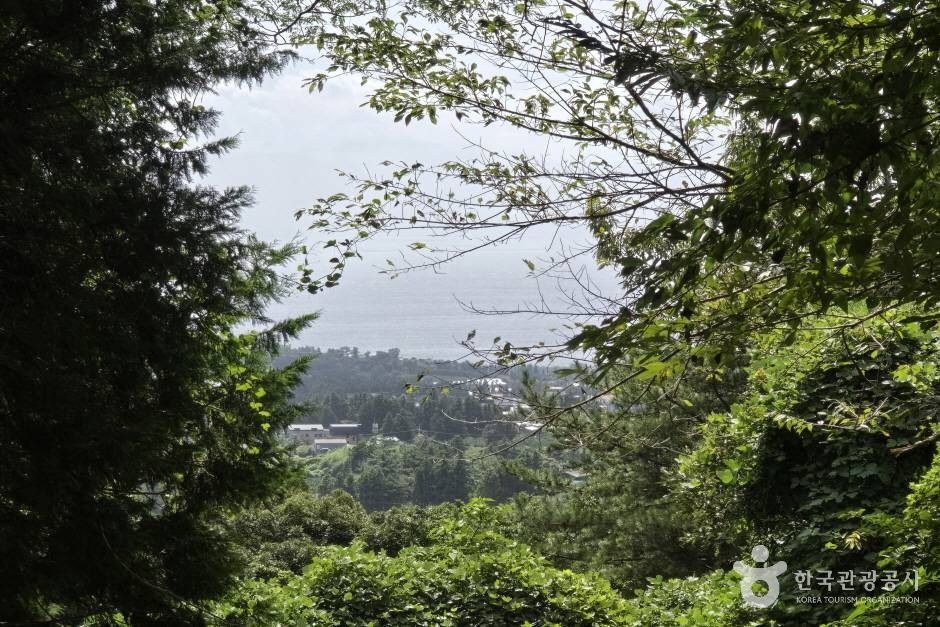
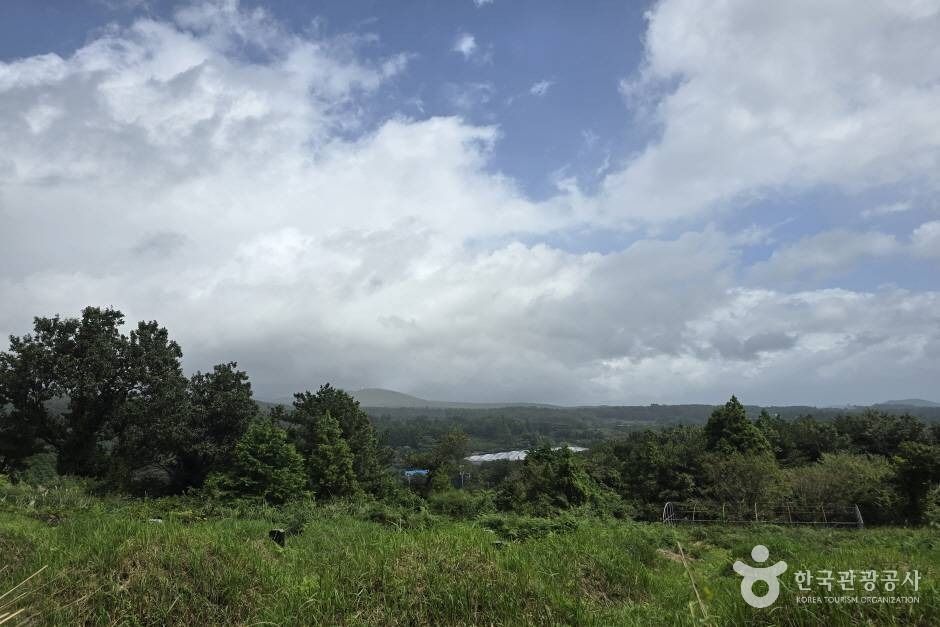
From the summit of Gaksibawi Oreum, you're said to be able to look out over the Seogwipo coast. Thanks to the fine scenery around it, it's said that scholars of old once enjoyed refined pastimes here, and looking out over the wide expanse of sea, it's a spot said to bring to mind the old atmosphere of scholars composing poems and sharing cups together.
A Few Things Worth Knowing Before You Visit
Gaksibawi Oreum is located in Hogeun-dong, Seogwipo, Jeju Special Self-Governing Province, and it's said to be open at all times, year-round without closed days. Nearby spots worth visiting are said to include Seogwipo Healing Forest, Eongtto Falls, and Mt. Gogeunsan, so it could be a good idea to pair a visit to Gaksibawi Oreum with a trip to these places.
GYULI's Tip · The south ridge is steep and lined with trachyte stones that can be slippery, so it's recommended to wear comfortable shoes and take your time going up and down. There's also a gentler route through the forest on the north side, so choose whichever suits your condition on the day.