You Think You Know Hairtail? Compare Jorim and Gui First
one plate of gui
Search for Jeju's local food online, and odds are you'll come across a photo of galchi-jorim (spicy braised hairtail) or galchi-gui (grilled hairtail). Shimmering silver flesh, thick cuts, and a spicy braising sauce, plenty of people say the photo alone is enough to make them hungry. But why hairtail is so special in Jeju, and what actually separates jorim from gui, often goes unexamined, people just order it because it's famous. Today we're breaking down the story behind Jeju's silver hairtail, and how to enjoy it through its two signature styles, jorim and gui. If you've only known the name so far, hopefully this gives you a proper introduction.
Silver Hairtail, a Fish That Shines From the Name Up
Hairtail caught in the waters around Jeju is commonly called 'eun-galchi,' silver hairtail. The name comes from the shimmering silver coating covering its whole body, said to be the reason behind the name. That silver coating isn't actually scales, it's a thin layer made of guanine, so delicate it can flake off with just a touch, and its shine is said to vary depending on how carefully it's handled. The waters near Jeju are known for being deep with strong currents, and hairtail caught there is said to have firm flesh with evenly distributed fat. Because it's often caught one at a time on a fishing line, it tends to have fewer scars on its body and keeps its silver coating intact, that's named as another one of its traits. It's fair to say this is a fish that demands extra care from cleaning through cooking.
Hairtail is known for flesh that's white and tender, yet still has texture when you chew. Its bones aren't tough and separate easily from the meat, so you can eat it without worrying too much about small bones, that's cited as one reason for its popularity too. Because the fat is worked evenly through the flesh, grilling brings out a deeply savory aroma, and braising lets that fat and umami dissolve completely into the sauce. Some also say the flesh gets plumper in summer, so the flavor is said to shift a little with the seasons. Maybe that's why people in Jeju don't stick to just one way of eating hairtail, plenty switch between jorim and gui depending on the mood or the weather that day.
Hairtail's said to taste best before its silver shine has fully worn off.
— 🍊 GYULIJorim or Gui, the Day's Decision
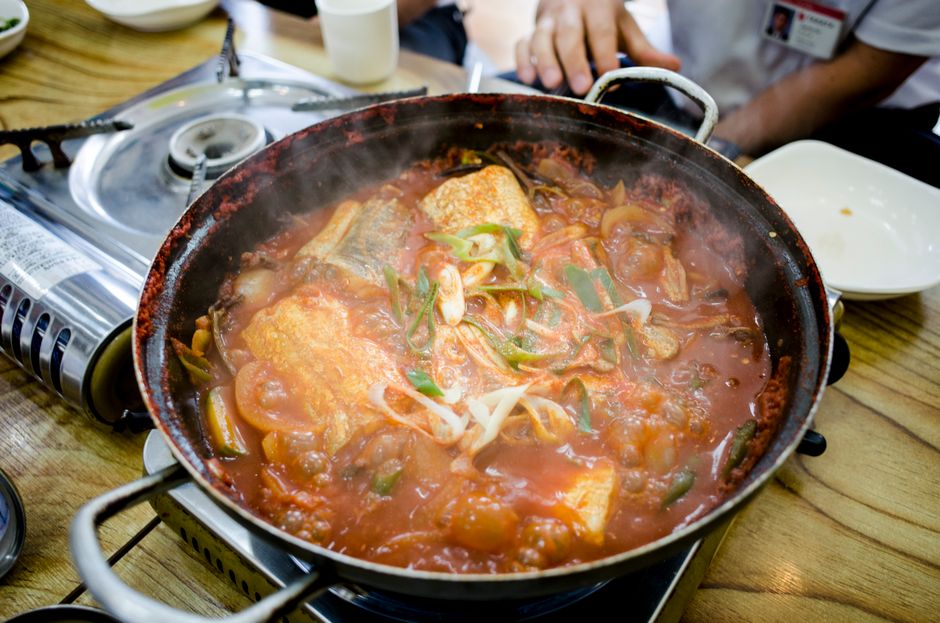
Galchi-jorim is said to be made by cutting hairtail into large pieces, laying them over radish or potatoes, pouring on a sauce of red pepper flakes and soy sauce until it nearly covers everything, and braising it slowly for a long time. The spicy, salty seasoning works its way through the hairtail's flesh, resulting in a flavor that pairs well with rice. The key is said to be taking the time to let the sauce reduce down, cooked slowly over low heat. The radish or potatoes that soak up the hairtail broth sometimes end up just as popular as the fish itself, so if you order jorim, don't skip the vegetables on the side. Plenty of people also say they seek out a warm bowl of jorim on rainy or chilly days.
Galchi-gui, on the other hand, is known as a relatively simple method, cleaned hairtail seasoned with just a little salt and grilled. With minimal seasoning, the fish's own freshness and flavor come through more clearly. The key is said to be grilling the outside golden and crisp while keeping the inside moist, and cooked that way, hairtail's savory fat is said to come through even stronger. No shortage of people say the flavor alone is enough to empty a bowl of rice without any extra seasoning. If jorim is rich and bold, gui leans toward clean and light by comparison. That's why plenty of travelers try both side by side to compare their different charms.
A Hairtail Spread, the Way It's Enjoyed in Jeju
In Jeju, some places serve both jorim and gui, while others are said to specialize in just one method. Because of that, seasoning and grilling style are said to vary a bit from place to place, so if it's somewhere new to you, it doesn't hurt to ask which method the spot is known for. Side dishes often include Jeju-style kimchi or wild greens, said to pair well with hairtail's salty, bold flavor. A whole large hairtail served intact on the table is also common, so first-timers are sometimes surprised by the size. Prices are said to vary by size, cooking method, and season, so it's worth checking before you order.
If your itinerary is tight, you may only get to choose one, jorim or gui. In that case, picking based on the day's weather or how you're feeling can be a good approach too. On a cold day when you want something hearty, jorim is said to be the right call, while on a day you're craving something clean and light, gui rarely disappoints. If you have the time, trying both on separate days and comparing how the same fish can taste so different depending on the method is arguably one of the fun parts of a Jeju trip. Whichever way you choose, the moment a silver hairtail lands on the table is enough to make it feel like you're really in Jeju.

GYULI's Tip · Galchi-jorim's spicy sauce can splash onto clothes, so it helps to bring an apron or a change of clothes. Gui takes a bit of time to pick apart the bones, so it's best enjoyed without rushing.