GYULI Says Galmamot Looks Like a Thirsty Horse Drinking Water
a pond that's said to never dry up
Today GYULI would like to introduce a small pond in Seongeup-ri, Pyoseon-myeon, Seogwipo — Galmamot (also called Galmoemot). It's said to be found along the roadside heading from the Seongeup-ri intersection toward Seongsan, near the entrance to Namsanbong. Administratively it's said to belong to Sinpung-ri, Seongsan-eup, but since it's actually closer to Seongeup-ri, it's said to be owned by Seongeup-ri village instead. This pond makes you curious just from its name, so today let's slowly unpack the story behind it first.
The Name 'Galmamot' Is Said to Come From a Thirsty Horse
The name Galmamot is said to originate from feng shui geomancy. It's said the pond got its name because its shape resembles a thirsty horse drinking water. It's also said that in the past, this pond was actually used to give water to horses and cattle — so the name and its use are said to line up quite well with one another. A pond where horses and cattle once quenched their thirst, on Jeju where water is precious — GYULI found herself moved thinking about how much of old Jeju life is packed into a single name.
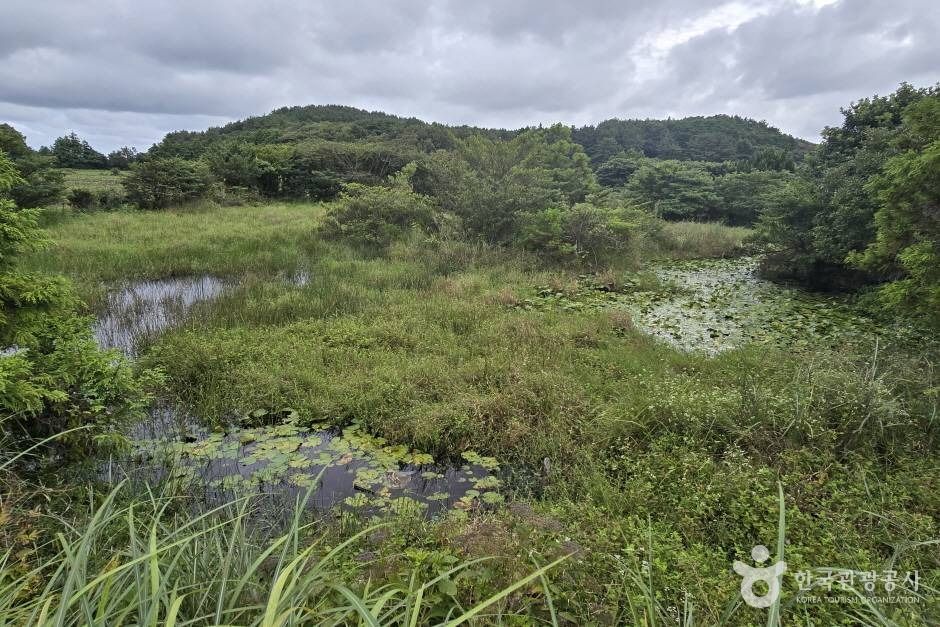
They say Galmamot got its name because it resembles a thirsty horse drinking water — a story that feels like it carries the time old Jeju people spent together with their horses and cattle.
— 🍊 GYULIA Mysterious Pond Said to Never Dry Up, Even in Drought
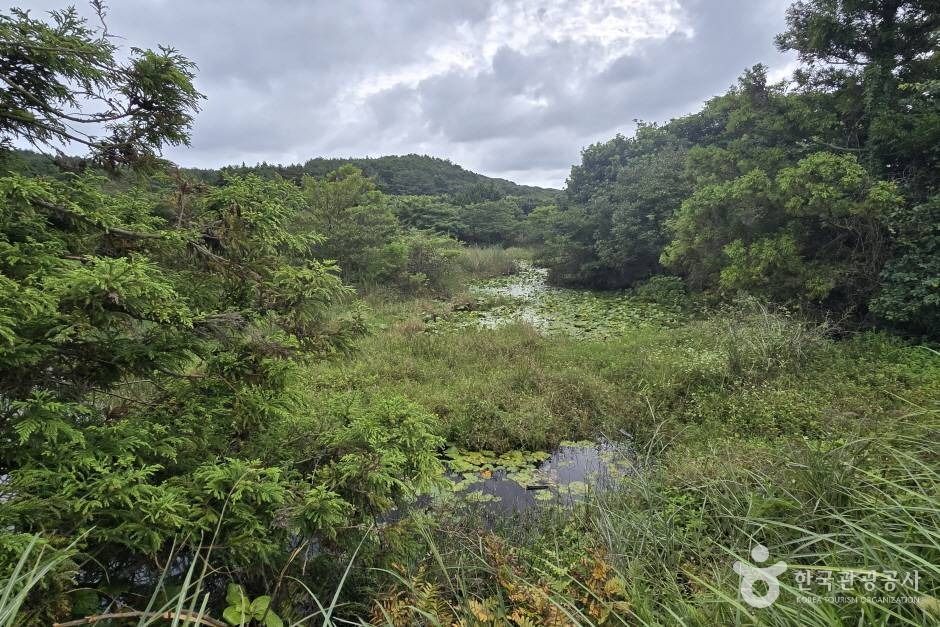
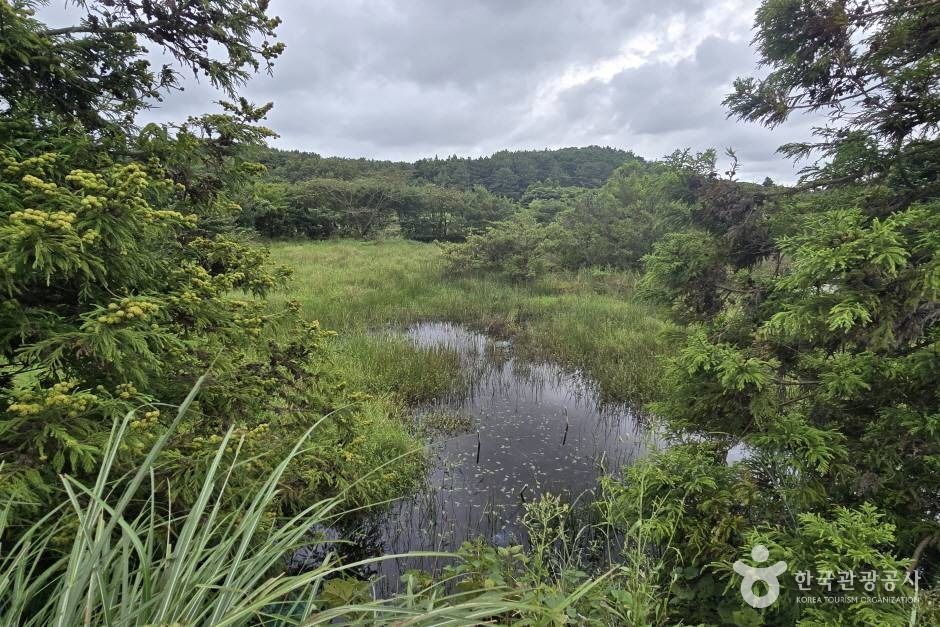
Galmamot is said to be a naturally formed pond, and it's said to never run dry no matter how severe the drought. At its center sits a smaller pond, said to be ringed by a circular stone wall, and mulpangdol — stones believed to be traces of when the pond was once used as a source of drinking water — are also said to remain there. Mulpangdol are said to refer to stones once used for drawing or carrying water, which hints at just how close this pond once was to the daily lives of village residents.
You might also wonder where the water comes from — it's presumed to flow in naturally along a channel from the direction of Namsanbong's crater. On top of that, an artificially built stormwater pipe is said to run beneath the roadside, adding water through that route as well. So it seems both a natural waterway and a human-made one work together to keep Galmamot filled.
A Few Things Worth Knowing Before You Visit
Galmamot is located near the entrance to Namsanbong in Seongeup-ri, Pyoseon-myeon, Seogwipo, Jeju Special Self-Governing Province. It's said to sit along the roadside heading from the Seongeup-ri intersection toward Seongsan, so if you're passing through that route, it shouldn't be hard to find. It's said to be open at all times, year-round, with no set hours to check before you go. That said, since it's an ecologically precious space where protected plants including sunchae grow wild, it's best to view it quietly from a distance without stepping into the pond or disturbing the plants.
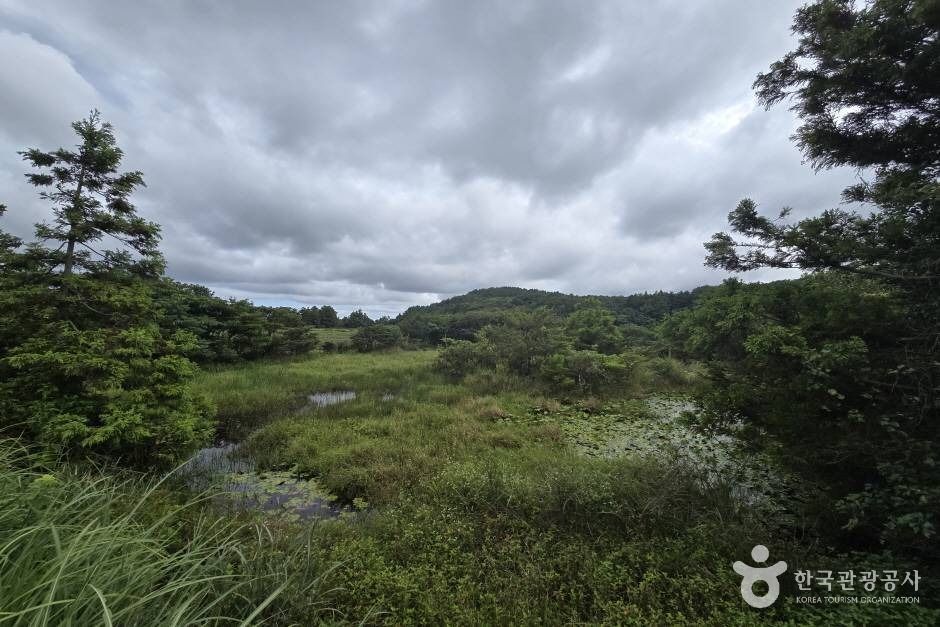
GYULI's Tip · Galmamot is said to be open at all times year-round, so you can stop by whenever you like. But since it's home to sunchae, a wild plant designated for protection by the Ministry of Environment, please be careful not to step on or disturb the plants around the pond.