Time the Tide Wrong and You'll Only See Half of It — Gwangchigi Beach
green rock flats at low tide
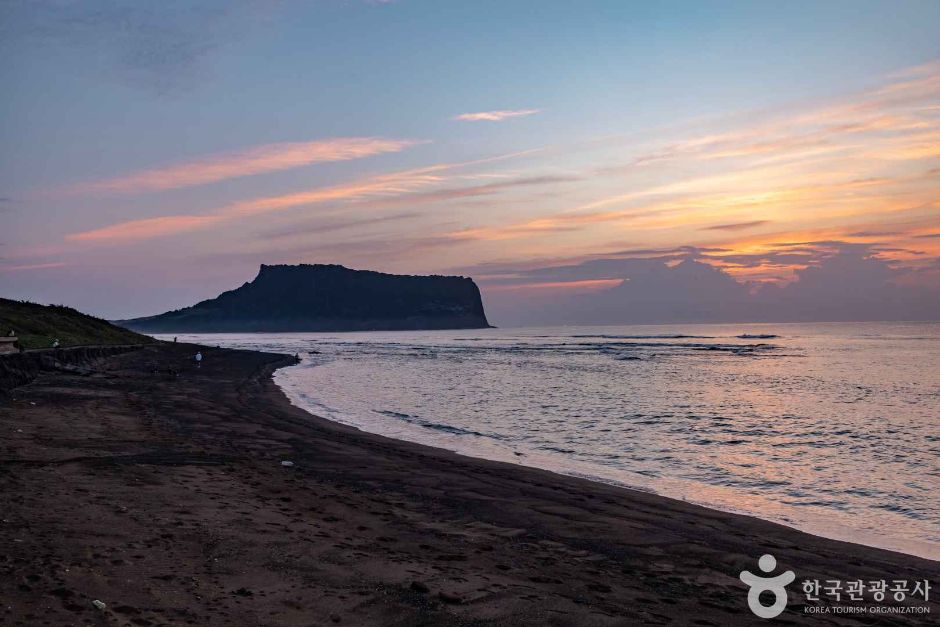
Gwangchigi Beach is said to sit right at the foot of Seongsan Ilchulbong, in Seongsan-eup on Jeju's eastern side. Thanks to a view that frames the wide sandy shore together with Seongsan Ilchulbong rising just beyond it, this beach is often counted among Jeju's most photographed spots. But what really makes Gwangchigi Beach memorable, it's said, isn't just the view of the peak. Visit when the tide is out, and you're said to meet a completely different face of the place — a striking landscape of black basalt flats blanketed in green moss suddenly comes into view. Some people are even said to time their visit deliberately around the tide, just to catch this one sight. So today, instead of climbing Seongsan Ilchulbong or walking the Olle trail, let's take a closer look at Gwangchigi Beach itself — the distinctive landform and scenery it holds on its own.
High tide, low tide — two completely different faces
Gwangchigi Beach is said to change dramatically in appearance depending on the tide. When the water is in, it's said to look much like any other beach, with calm sea and sand blending together. But once the tide goes out, the story is said to change: wide rock flats emerge beyond the sand, revealing black stone ground that's usually submerged. What stands out most, according to many accounts, is the green moss spread thickly across these rock flats — the combination of black stone, green moss, and shallow pools of seawater left behind is said to create a palette rarely seen on other beaches.
That said, tide times are said to vary from day to day and by season, so I'll be careful not to state a specific hour when the water goes out. The same Gwangchigi Beach can look completely different depending on whether you arrive at high tide or low tide, so if you're hoping to see the green rock landscape in person, checking that day's tide information before you go is said to be the surest way to catch it.
Walking out onto the green rock flats
The exposed rock flats of Gwangchigi Beach are worth just looking at, but plenty of people are said to carefully walk out onto them too. Small tide pools are said to dot the wide flats, and the sight of Seongsan Ilchulbong or the sky reflected in them is often mentioned as especially photogenic. That said, the moss-covered stone is said to be quite a bit more slippery than it looks, so it's best to watch your footing and move slowly.
Looking down from Seongsan Ilchulbong and standing on the rock flats of Gwangchigi Beach are said to leave completely different impressions. From the summit, the beach, village, and sea are said to spread out below all at once; at Gwangchigi Beach, it's the reverse — you look up at the peak rising in front of you while taking in the green rock flats at your feet. That contrast is said to be why many people visit both Seongsan Ilchulbong and Gwangchigi Beach on the same day.
There's a face you only get to see once the tide goes out — that's what people who've visited Gwangchigi Beach tend to say.
— 🍊 GYULIClose by, but each holding its own story
Gwangchigi Beach is also known as the endpoint of Jeju Olle Route 1, and it's said to sit close enough to Seongsan Ilchulbong to walk between the two. Because of that, it's often treated as a natural stop after climbing the peak or finishing the trail — but the landform and scenery that Gwangchigi Beach holds on its own are said to only really come through if you take the time to look closely. If climbing Seongsan Ilchulbong is an experience of looking down at land shaped by a volcano, then Gwangchigi Beach is said to be an experience of standing right at your feet on land shaped by the tide.
Gwangchigi Beach is also said to be beautiful around sunrise and sunset, but for anyone hoping to see the green rock flats, checking the tide first and planning around it is recommended above all. The fact that the same spot can look different every time you return is said to be one reason Gwangchigi Beach has stayed so well loved.
GYULI's Tip · If you want to see the green rock flats at Gwangchigi Beach, check that day's tide schedule before you go and time your visit for low tide. The moss-covered rock can be slippery, so wear comfortable shoes, and watch your step carefully around the tide pools. Since tide levels are said to shift steadily throughout the day, it's best to give yourself plenty of extra time.