The Ohyeondan Story Actually Began at Gyullim Seowon
became a seowon, and rose again, it's said
Hi, this is GYULI. A while back, GYULI told you about Ohyeondan, a shrine located in downtown Jeju City. I introduced it as an altar honoring five Confucian scholars who were either exiled to or served as officials in Jeju during the Joseon dynasty. But right next to Ohyeondan, there's actually another place that's said to be the very root of that story — Gyullim Seowon. The name might sound unfamiliar, but it's said to be a seowon formed by combining Chungam-myo, a shrine for ancestral rites, with Jangsudang, a space where students were taught. Today, let me slowly walk you through how Gyullim Seowon began and how it came to look the way it does now.
A Seowon With Two Faces: Chungam-myo and Jangsudang
Gyullim Seowon is said to be a seowon formed by combining Chungam-myo, which served a ritual function, with Jangsudang, which served an educational function. Rather than being a single building, it's said that this place brought together two different characters in one location — a shrine for honoring a departed soul, and a space for teaching scholarship. Perhaps that's why, looking into the story of Gyullim Seowon, it turns out to be more than just an introduction to an old educational facility — it follows a fairly long thread that starts with the wish to honor a scholar exiled to Jeju and continues on to a place where later generations were taught.
The story is said to date back to 1578. At the time, Jo In-hu, who was serving as a Jeju magistrate (pangwan), is said to have built a shrine at the place of exile of Kim Jeong, a scholar who had been exiled to Jeju during the Gimyo Purge and was later put to death there, in order to console his soul. This is said to be the starting point of Gyullim Seowon. When GYULI told you about Ohyeondan, I mentioned that the exiled scholars didn't give up their scholarly aspirations even on this unfamiliar island — and Kim Jeong's story is said to sit right at the center of that.
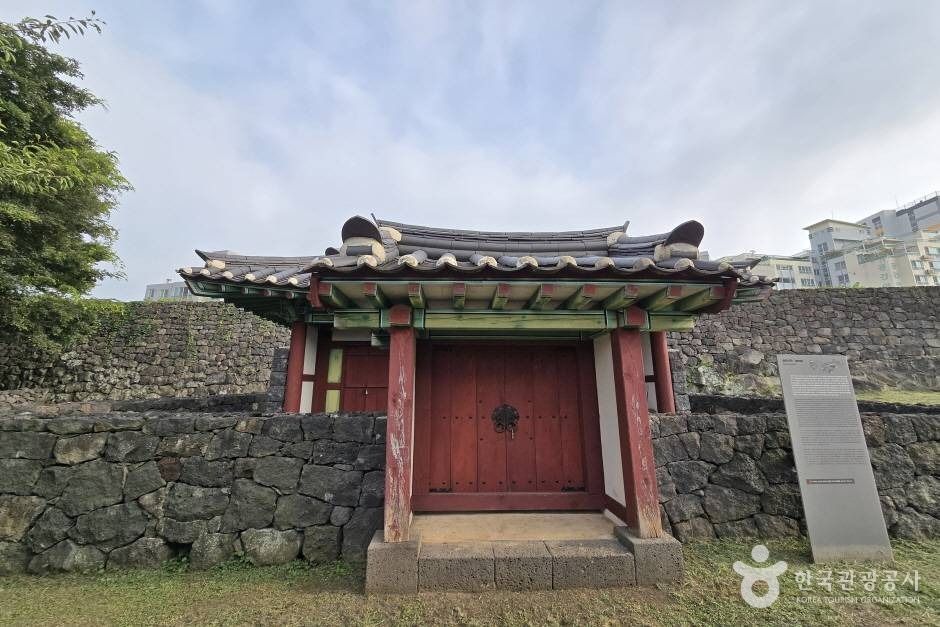
Hearing that this place started as a shrine for ancestral rites and went on to become a seowon for teaching later generations, the weight of the time it holds felt quite extraordinary to me.
— 🍊 GYULIHow Jangsudang Was Built, and How the Name 'Gyullim Seowon' Came to Be
Quite a while later, in 1660, Lee Goe, who was serving as Jeju moksa (magistrate), is said to have built Jangsudang. Jangsudang is said to have been an educational space where students were taught, and at this point, the shrine honoring Kim Jeong and Jangsudang were still said to be two separate places. Then in 1667, Choi Jin-nam, a Jeju pangwan, is said to have moved Kim Jeong's shrine south of Jangsudang, to what is now the site of Ohyeondan. The shrine was then designated as the 'sa' and Jangsudang as the 'jae,' the two combined into one, and a plaque reading 'Gyullim Seowon' was hung — which is said to be how the name Gyullim Seowon came into being.
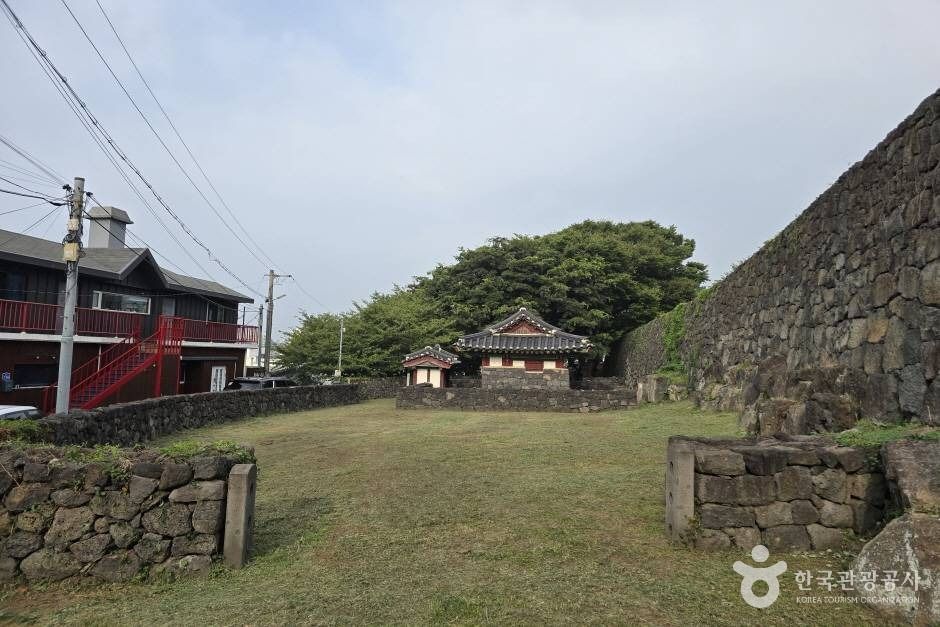
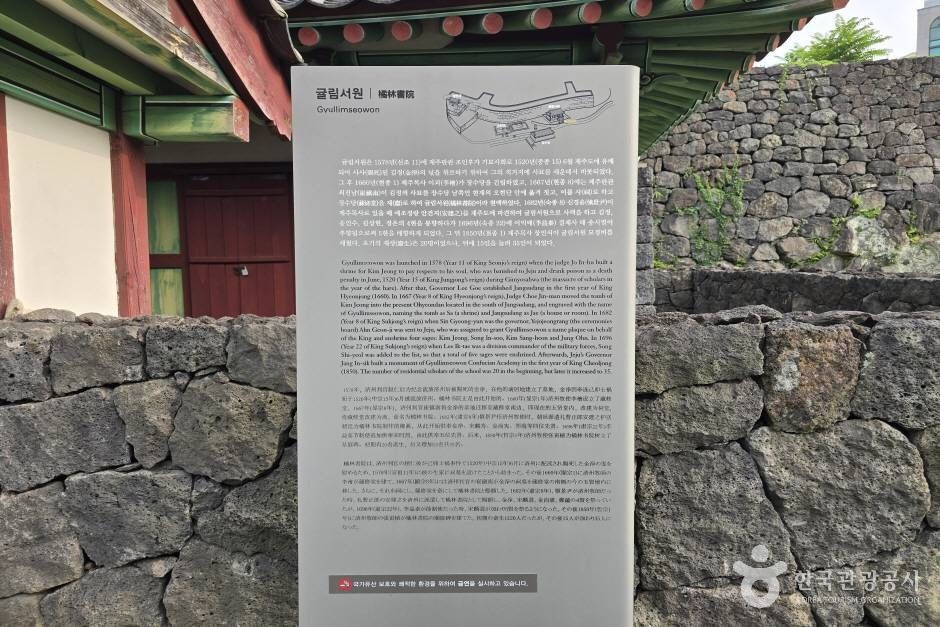
The story continues even after the seowon received its name. In 1682, while Shin Gyeong-yun was serving as Jeju moksa, he is said to have dispatched Yejo Jeongnang An Geon-ji to Jeju, and Gyullim Seowon is said to have received royal chartering (saaek) at that time. Saaek refers to the king personally granting a name to a seowon, so this is said to mean the place gained formal recognition. At this time, four scholars — Kim Jeong, Song In-su, Kim Sang-heon, and Jeong On — are said to have been enshrined and honored there.
Then in 1696, during the time of Commander (jeoljesa) Lee Ik-tae, Song Si-yeol was additionally enshrined, bringing the number honored together to five, it's said. These five are said to be the very scholars that Ohyeondan, the 'five sages,' honors.
Abolition, and a Story That Continued Anyway
Gyullim Seowon, which had continued on in this way, is said to have been abolished in 1871 under the seowon abolition decree. Amid a nationwide movement to dismantle seowons, Gyullim Seowon is said to have become one of the places affected — and hearing that a place with such a long history closed its doors in a single stroke left GYULI with a bit of an ache in the heart.
But the story didn't end there. In 1892, Kim Ui-jeong, a Jeju resident, is said to have led an effort to erect a jodusok (stone memorial marker) and build an altar at the site of Gyullim Seowon, in order to honor the memory of the five sages for later generations, and rites are said to have been held there. Today's Ohyeondan is said to be a trace carried on from that very spot — so knowing that Gyullim Seowon and Ohyeondan aren't separate stories but branches of the same root made me want to think of the two places together from now on.
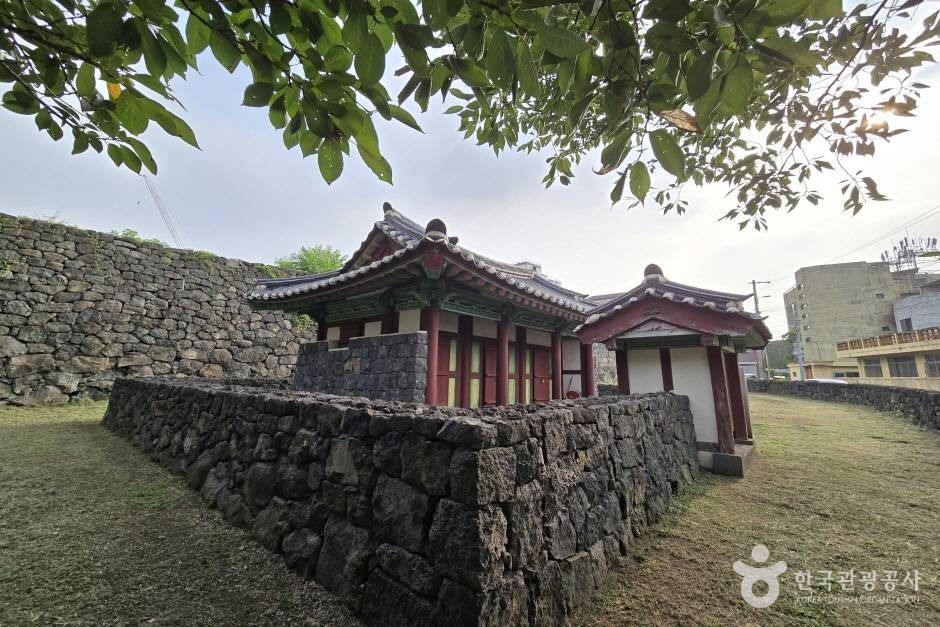
After 2000, Jeju City is said to have begun restoration work on Gyullim Seowon. Jangsudang, where students once studied, along with the side gate and stone walls, were completed one by one, and in August 2007, the restoration of Hyanghyeonsa is said to have been finished as well. More than 130 years after its abolition, the place is said to have gradually regained something of its old form — which makes the span of time this place carries feel quite long.
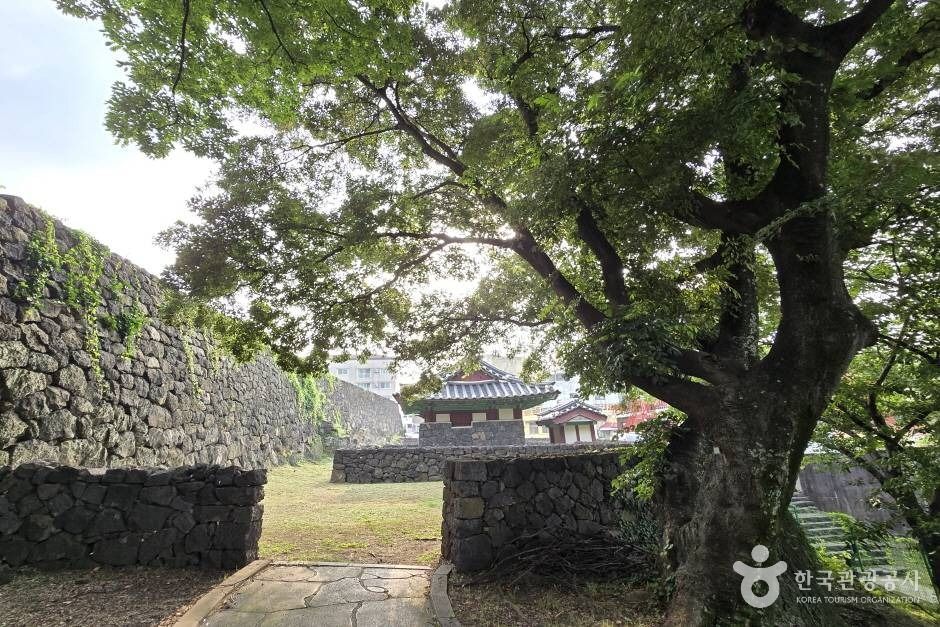
Last time, when GYULI told you about Ohyeondan, I only introduced it as an altar honoring the souls of exiled scholars — but now, knowing the story of Gyullim Seowon, I've learned that its roots run much deeper and longer. Starting as a shrine for ancestral rites, joined by Jangsudang where students were taught, gaining its name and royal charter, being abolished, and then restored again — Gyullim Seowon seems to be a place where each of these layers of time has settled, one on top of another.
GYULI's Tip · Gyullim Seowon is located in Ido-il-dong, Jeju City, and is said to be open at all times, year-round. Ohyeondan sits right beside it, so visiting both places together might help you take in the full story of this site.