Hwangwoji Coast: Snorkeling Where the Waves Can't Reach
sinking into a natural pool
If you search for things to do in Seogwipo, the name Hwangwoji Coast tends to come up sooner or later. Located near Oedolgae in Seohong-dong, this spot is often introduced as a snorkeling destination, known for a rock formation that blocks incoming waves from outside, leaving the water inside calm like a natural pool, along with twelve caves said to remain along the coastline. Many accounts describe the water as clear enough to see straight through to the bottom on a sunny day, and it's said that visitors carrying snorkeling gear show up steadily through the summer. Today GYULI is laying out what's known about Hwangwoji Coast — and being upfront about what isn't confirmed. If you're planning a snorkeling trip, it's worth reading through to the end.
Where the Waves Stop: A Natural Pool-Like Formation
What's said to set Hwangwoji Coast apart from other beaches is the terrain itself. A basalt formation is said to wrap around the water like a wall, filtering out the larger waves rolling in from outside before they reach the inner pool. Thanks to that, the water inside is frequently described as settling calm like a natural pool — though some accounts note that even on days when the surf outside is rough, the inside tends to stay relatively still, while on other days, depending on the weather, waves can reportedly reach even the inner section, so it's worth checking conditions on-site the day you visit. There's said to be a stairway leading down to the coast, and since the rocks can get slippery when wet, it's worth watching your step on the way down.
Twelve Caves, Reportedly Tracing Back to the Japanese Colonial Period
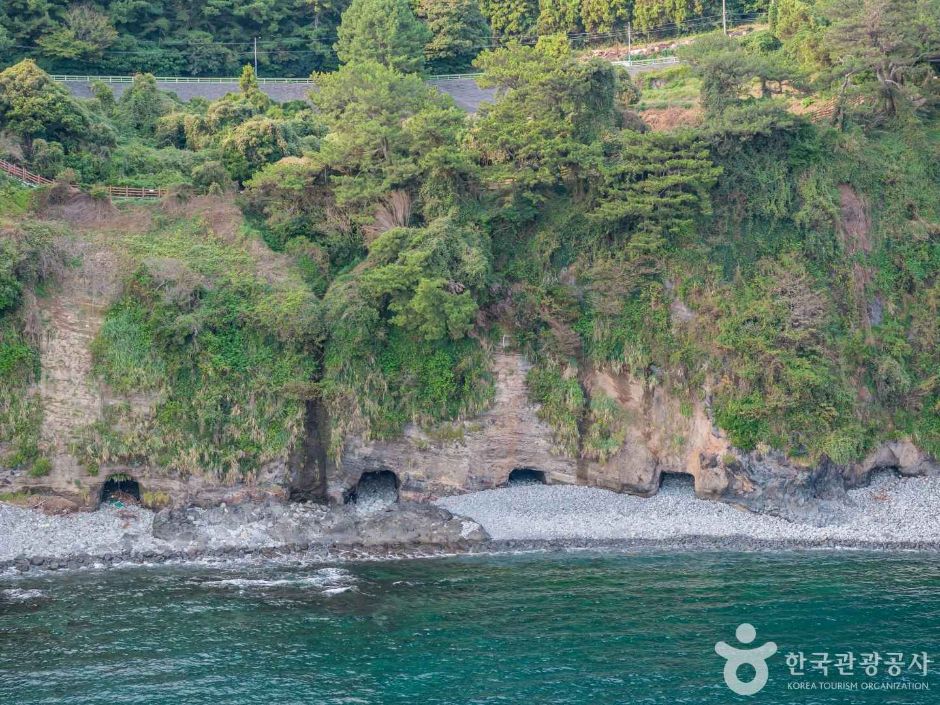
The story that comes up alongside the name Hwangwoji Coast is the "twelve caves." Roughly twelve caves of varying sizes are said to be carved along the coastal cliffs, and these caves are widely described as traces from the Japanese colonial period. That said, the exact purpose each cave served, or precisely when and how they were made, isn't something GYULI can state with certainty, so that's as far as this goes. If you're curious, checking on-site signage or related materials for more detail is probably worthwhile. The area around the caves is rocky with uneven footing in many spots, so if you're planning to explore further in, non-slip footwear is recommended.
Many say it's quiet enough inside Hwangwoji Coast that even the waves sound muffled — exploring the caves one by one at a slow pace is part of the fun.
— 🍊 GYULIWhy It's Often Introduced as a Snorkeling and Swimming Spot
The reason Hwangwoji Coast keeps coming up as a snorkeling destination reportedly comes down to the water's color and clarity. With the waves filtered out, the water stays relatively calm, and combined with its clear quality, many accounts describe being able to see the underwater terrain and fish clearly. It's said that plenty of visitors bring their own gear to snorkel through the summer months, though exact water temperature and visibility can keep changing by day and season, so checking recent reviews before you go is probably useful. Whether lifeguards are stationed there at all times reportedly varies by season, so if you're planning to snorkel or swim, be sure to bring safety gear like a life vest and avoid pushing into areas beyond what feels manageable. Depth and currents can also shift with the tide, so it's worth checking tide times before heading out.
In the end, many accounts describe Hwangwoji Coast as a place where calm water shielded from the waves, the story behind the twelve caves, and clear water all come together in one spot. If you're planning a snorkeling trip or a quiet coastal walk while in Seogwipo, it's said to be worth a visit — just keep in mind the terrain can be rough and safety facilities may be limited, so please follow safety guidelines while you enjoy it.
GYULI's Tip · Hwangwoji Coast is said to have a lot of rocky terrain, and wave conditions can reportedly change day to day. If you're planning to snorkel or swim, bring safety gear, and it's safer to double-check on-site conditions or the latest notices before you visit.