Do You Know There's a Fortress That Once Guarded Jeju's Western Sea?
now resting in the shade of old trees
When planning a trip to Jeju, most people search for oreum, ocean-view cafes, or the best black pork restaurants first. Fewer visitors make room for the quiet old fortress ruins tucked along Jeju's western coast. Jeju, as an island, is said to have long had to stay alert to incursions from outside, and one trace of that watchfulness remains today in Myeongwolseongji, in Myeongwol-ri, Hallim-eup, Jeju City. It isn't flashy like a major tourist spot, but I wanted to share this quiet old fortress site with anyone who'd like to look at Jeju a little more deeply. Today GYULI wants to walk you through the story of Myeongwolseongji, and the scenery that remains there now.
Myeongwolseongji, a Garrison Fortress That Guarded Jeju's Western Sea
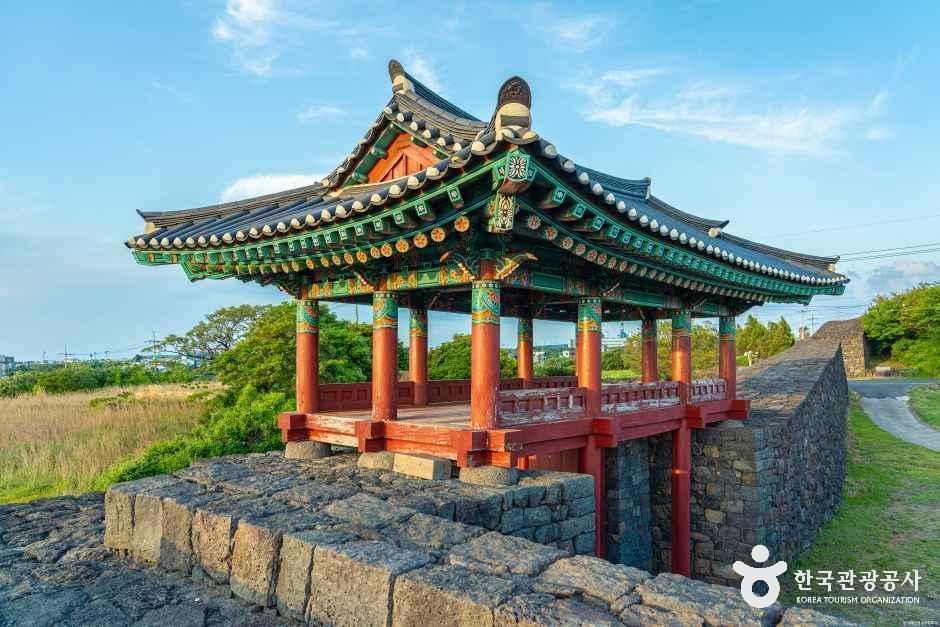
Myeongwolseongji is said to be one of the garrison fortresses, or jinseong, built to defend Jeju's western coast during the Joseon dynasty. As an island, Jeju is said to have long been vulnerable to incursions from outside forces, including Japanese raiders, and the Joseon court is said to have responded by building defensive strongholds along Jeju's coastline and stationing troops there. One of those coastal strongholds stood where Myeongwol-ri, Hallim-eup sits today, and it remains known as Myeongwolseong, or Myeongwolseongji. I'd rather not state exactly when it was first built, or over how many years it took its present form — that's not something I want to pin down here. What does seem clear is that it stands as one of the garrison fortresses that guarded Jeju's western coast for a long time.
No one knew what might come across the sea, so they built walls and stationed people to watch. For the people of Jeju back then, every stone in that wall must have meant a measure of peace of mind.
— 🍊 GYULIWhen people think of Jeju's coastal defense heritage, many first picture Hwanhaejangseong, the long wall said to run along the island's entire coastline. Myeongwolseongji is said to be a somewhat different kind of site. If Hwanhaejangseong was a long wall stretching along the coast, places called jinseong, like Myeongwolseongji, are said to have served as strongholds within that defensive line, where troops were actually stationed and local government offices stood. Think of it as a fortress built here and there along that long defensive line. Several such jinseong are said to have been built along Jeju's coast, and Myeongwolseongji is remembered as the one that guarded Jeju's western side.
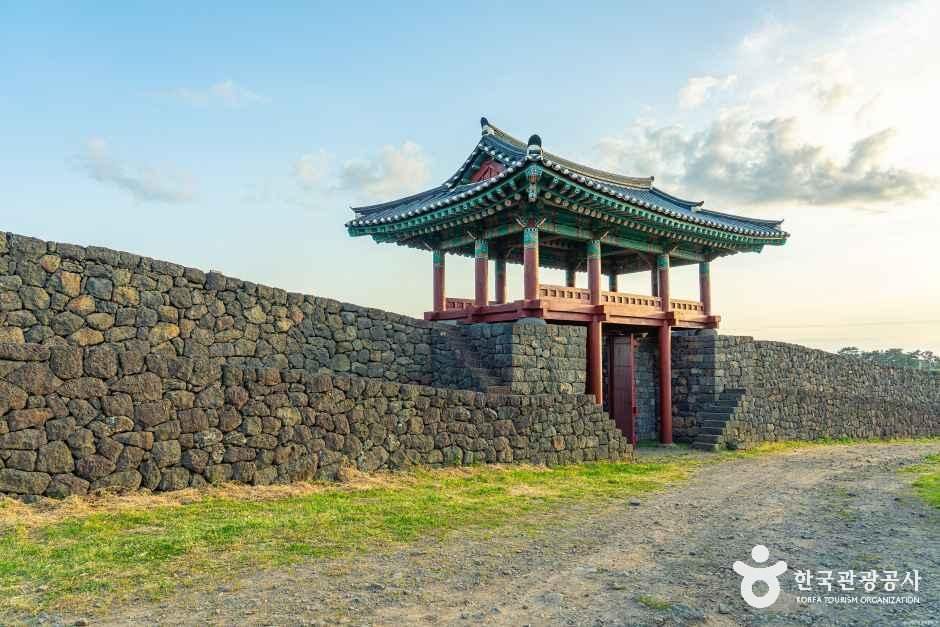
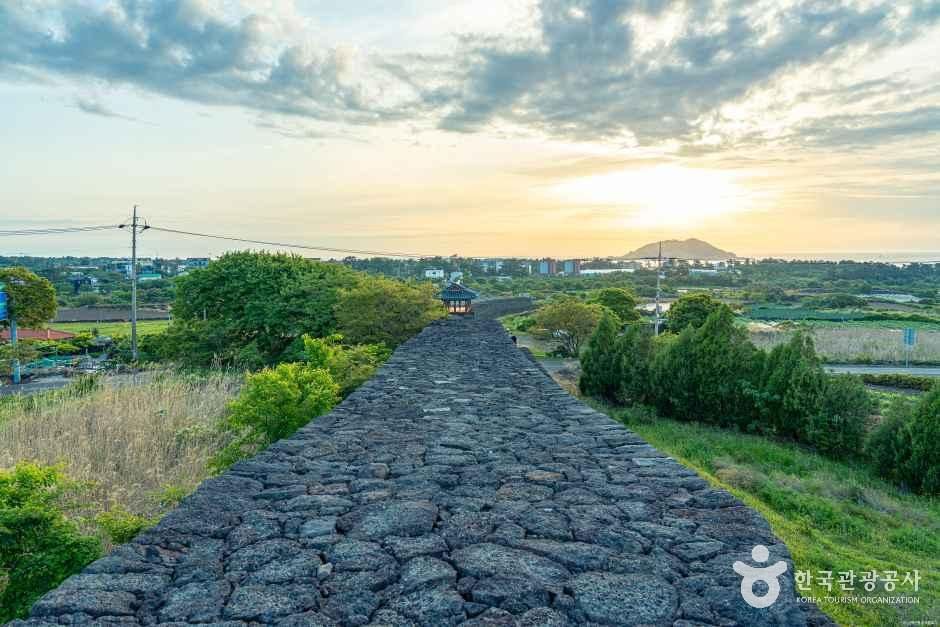
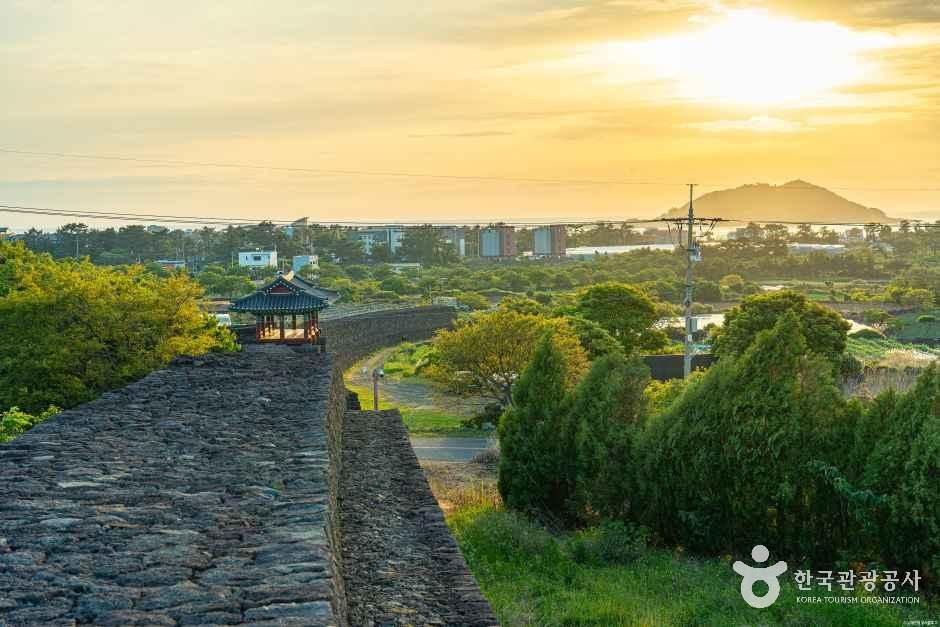
The Walls and Old Trees That Remain Today
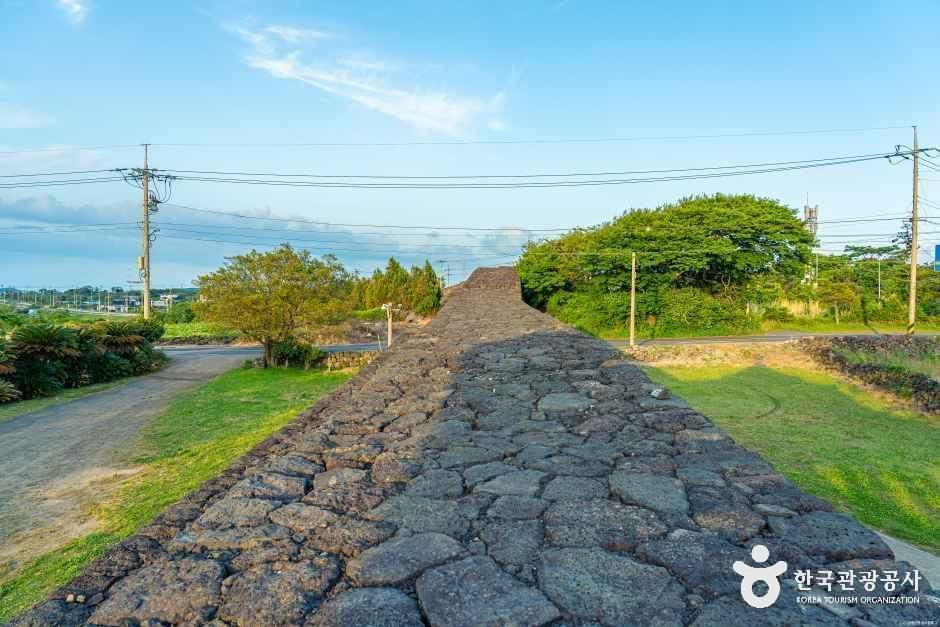
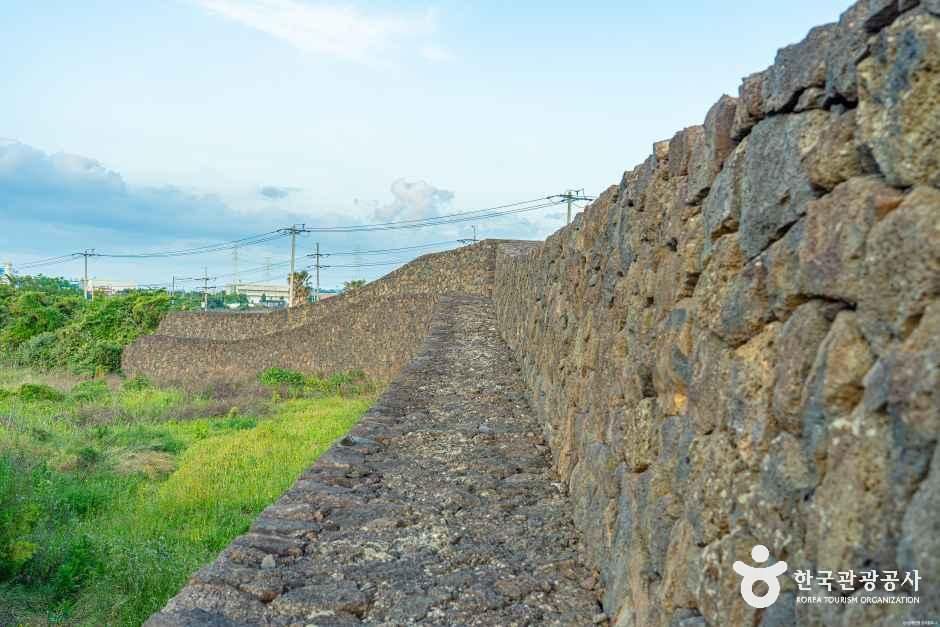
Over time, Myeongwolseongji is said to no longer retain its original full form. Only parts of the fortress walls are said to remain, or to have been restored, but standing there, you can still faintly sense traces of what was once a defensive stronghold. And no story about Myeongwolseongji is complete without the old trees found throughout the area. A grove of old trees, including hackberry trees said to be several hundred years old, is said to stand clustered around the fortress site, and word has it that the shade and scenery these trees create blend with the atmosphere of the old fortress to produce a distinct mood. I'd rather not state the exact age of these trees here — I'll just say carefully that it's a grove of old trees said to be several hundred years old.
Now a Quiet Place for a Walk
This fortress site, once built for military purposes, now seems to remain instead as a quiet place for a walk, good for reflecting on the past. It's not crowded with large signs or elaborate facilities, and word has it that this is exactly what makes it a good place to quietly sit with Jeju's western history. Walking slowly beneath the shade of the old trees, it feels strange to think this was once a military stronghold where people kept a watchful eye on the sea. Thanks to its quiet atmosphere, it's also said to be gradually becoming known as a good spot for photos.
Most people build their Jeju itinerary around the sea, the oreum, and good food. But every once in a while, it's worth stopping by a quiet old defense site like this one. It may not be flashy, but the weight of the time held within it is nothing light. If your travels take you toward Hallim-eup, GYULI recommends pausing for a moment at Myeongwolseongji to feel out that old place for yourself.
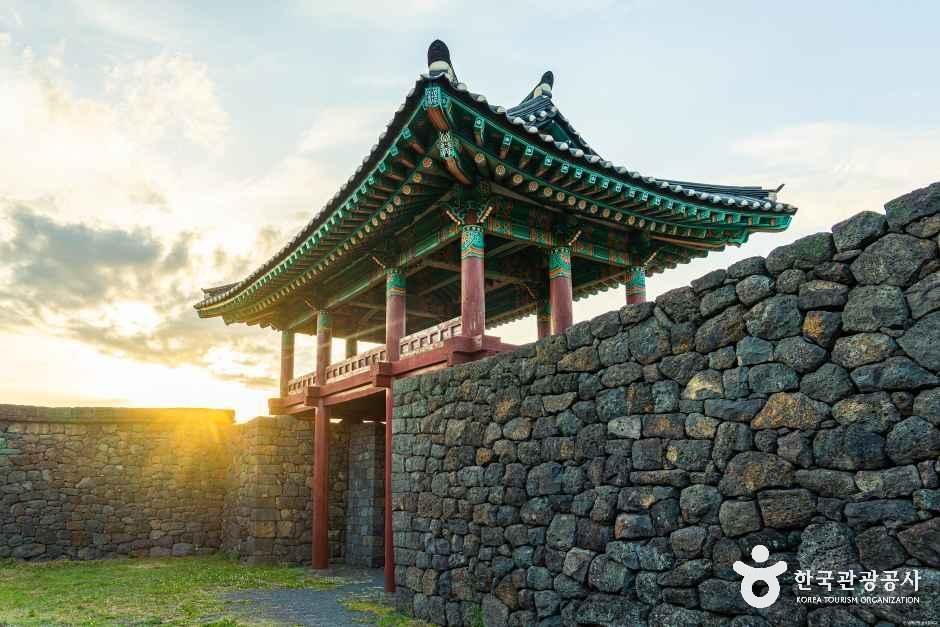
GYULI's Tip · Myeongwolseongji is located in Myeongwol-ri, Hallim-eup, Jeju City, and is said to be more convenient to reach by car than by public transit. With its wide lawn and shade from old trees, it's also a pleasant spot to rest for a while, so it's worth planning your route to include other nearby spots in Hallim-eup.