Samyang Beach: The Black Sand Everyone Talks About
mixed with volcanic ash
Have you heard of a beach not too far from downtown Jeju by car that looks distinctly different from every other beach on the island? That's Samyang Beach, located in Samyang-dong. Lined up next to Jeju's other well-known beaches, the first thing that reportedly sets Samyang apart is its sand color. Unlike beaches such as Hyeopjae or Woljeongri, often introduced for their white, fine sand, Samyang Beach is frequently described as having a sandy shore that looks black due to volcanic ash mixed in. Today GYULI is laying out what's known about this black-sand beach — and being upfront about what isn't confirmed. If you're thinking about a trip to Samyang, it's worth reading through to the end. Many find it fascinating that beaches within the same island of Jeju can look this different from one another.
Volcanic Ash: What Turns the Sand Black
The reason Samyang Beach's sand looks black is said to be volcanic ash — grains formed by Jeju's volcanic activity — mixed into the sand. GYULI can't pin down the exact ratio or grain size with certainty, but many accounts describe the color ranging from a dark grayish-brown to nearly jet black in places when seen under sunlight. Some reviews also note that the sand's color looks noticeably different wet versus dry, so the impression it leaves can shift depending on the time of day and the weather. This kind of deep black sand is said to be uncommon even within Jeju, which is reportedly why it leaves such a distinct impression compared to other beaches. Visitors used to white sand may find Samyang's black sand a bit unfamiliar at first, but that novelty is also said to be exactly why the beach stays memorable. Some reviews mention that even the texture underfoot feels different from a typical white-sand beach, and a few visitors reportedly seek Samyang out specifically for that difference.
Why It's Known as a Summer Sand-Bath Spot
No conversation about Samyang Beach skips the topic of sand baths. As the black sand heats up under the sun, there's said to be a local custom of burying yourself in it like a spa treatment, and this is reportedly a common sight especially during midday hours in peak summer. The old story goes that burying your body or legs in the heated sand can help with nerve or muscle pain, though this is better understood as something passed down locally rather than a medically verified effect. Sand temperature can vary a great deal depending on the day's heat and sun intensity, so it's safer to check the temperature before making prolonged skin contact. If you're planning to try a sand bath yourself, avoid the hottest hours so you don't get burned, and be sure to bring enough water to stay hydrated. If you're there with kids, have an adult check the temperature first to rule out any burn risk, and take breaks rather than staying buried in the same position for too long. Bringing a shade tent or parasol to set up a spot out of direct sun is also mentioned as a good idea.
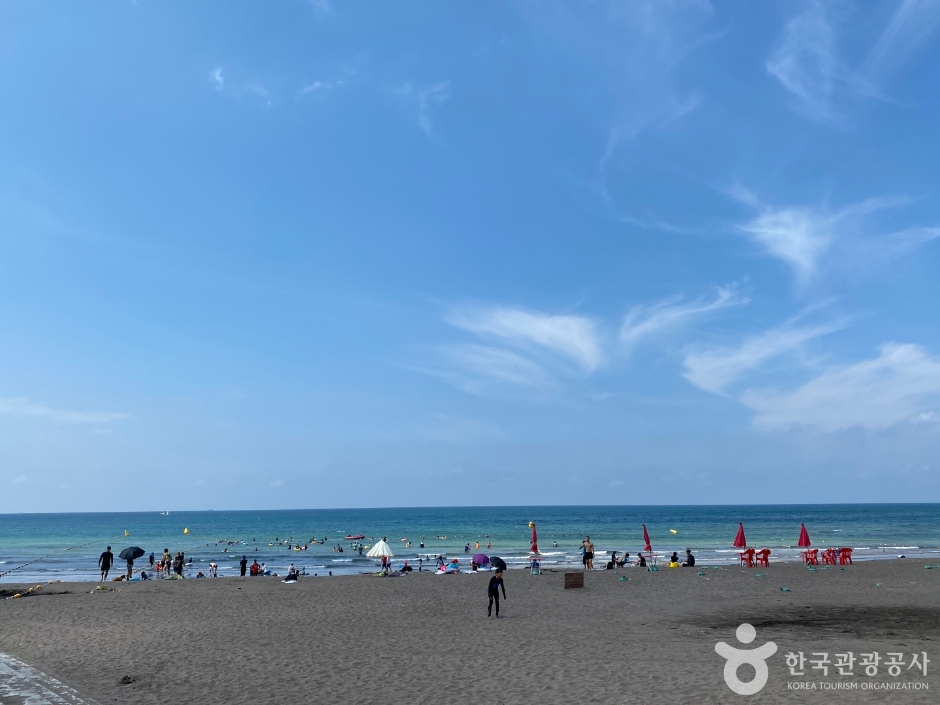


Black sand is said to heat up faster too, so before a long barefoot walk, it's worth checking the ground temperature under your feet first.
— 🍊 GYULIEasy to Reach from Downtown Jeju
Another advantage frequently mentioned about Samyang Beach is how close it is to downtown Jeju. It's said to be not far from the airport or the city center, which is why it's often introduced as a beach that doesn't require the long drive west or east that Hyeopjae or Woljeongri would. For travelers on a short itinerary, it's said to be an easy stop to fit in, and those staying in downtown Jeju reportedly use morning or evening hours for a quick, light visit. That said, exact travel time and public transit routes can vary depending on your starting point and traffic conditions on the day, so it's worth checking ahead of time. Parking and amenities are said to be available near the beach, but whether they're operating can reportedly shift with the season and site management, so that's worth keeping in mind too. Thanks to the proximity to downtown, many visitors reportedly pair a visit with nearby restaurants or cafes for a short half-day outing.
In the end, Samyang Beach seems to carry an appeal all its own, distinct from Hyeopjae or Woljeongri. Between the volcanic-ash black sand, the summer sand-bath tradition, and how easy it is to reach from downtown Jeju, those three points alone should be enough to get a feel for what makes Samyang stand out. Exact operating details, sand temperature, and amenity conditions can vary day to day, so check on site and enjoy the visit safely.


GYULI's Tip · Sand temperature and amenity operations at Samyang Beach are said to change with the season and weather. Check the sand temperature before a sand bath, and look up the latest notices before you visit.
The Real Stories GYULI Heard
Looking through visitor reviews, a few things kept coming up. Every summer, the beach's opening is said to come with a small festival, and some visitors mention catching fireworks at night. In peak summer, hours reportedly stretch into the evening, so on hot days you can enjoy the beach after dark too. Another recurring impression is that it feels less like a crowded tourist spot and more like a local place, with residents said to come for quiet morning walks. Some note the public parking lot is a short walk from the restrooms, and it's said to be reachable by bus too. That said, festival and night-opening schedules can shift year to year, so check the latest updates before you go.