You Think You Know Tilefish? Try It Dried First
Jeju's golden tilefish
If you've ever spotted the name 'okdom' on a market stall or a menu while traveling around Jeju, you may have wondered why this white-fleshed fish with reddish stripes is treated with such special regard. Okdom, tilefish, is said to be one of Jeju's signature fish, yet plenty of people encounter it without really knowing what kind of fish it is or why it's long been considered so precious, they just try it because it's famous. Today we're breaking down the story behind okdom, and how it's said to have been enjoyed in Jeju. If you've only known the name so far, hopefully this gives you a proper introduction.
Okdom, a Story Held in White Flesh From Jeju's Sea
Okdom is said to be a white-fleshed fish caught in the waters near Jeju. Its body is described as a soft pink that turns yellowish toward the belly, and its unusually large, clear eyes are often named as another distinguishing feature. It's said to live near sandy or muddy seabeds in deep water, which is why catching it, both the method and the timing, is said to be trickier than for many other fish. Historically, okdom is said to have been less of an everyday fish for Jeju people and more one reserved for honored guests or special occasions. Even today, it's not hard to spot okdom laid out neatly to dry at Jeju markets or shops selling dried seafood, and that sight itself is said to be one of the island's familiar scenes.
Okdom is known for flesh that's white and finely textured. Compared to other white-fleshed fish, it's often described as tender yet carrying a subtle sweetness when chewed. It's said to have a mild smell, so it's often introduced as an approachable fish even for people who aren't big fans of seafood. Its flesh is also said to separate cleanly along its grain, so it tends to hold together rather than fall apart when grilled or simmered into soup. It's said to develop even deeper flavor once lightly dried compared to when it's fresh, and that's said to be part of why the tradition of drying okdom before eating it, rather than cooking it fresh, took root in Jeju long ago.
Okdom's flavor is said to deepen as it dries in the sun.
— 🍊 GYULIFlavor That Deepens With Drying, Grilled Okdom
The way okdom is dried is said to involve salting the cleaned fish evenly, then laying it out on a rack or line to dry for several days in the sea breeze and sun. Over that time, moisture is said to slowly leave the fish while the savory flavor inside concentrates, which is said to be why lightly dried okdom is often prized even more than the fresh catch. Because how much it dries depends on the weather and how strong the wind is, it's said to take real experience and a practiced sense to handle it well. Since texture and saltiness shift depending on how dried it is, some are said to use lightly dried and heavily dried fish differently.
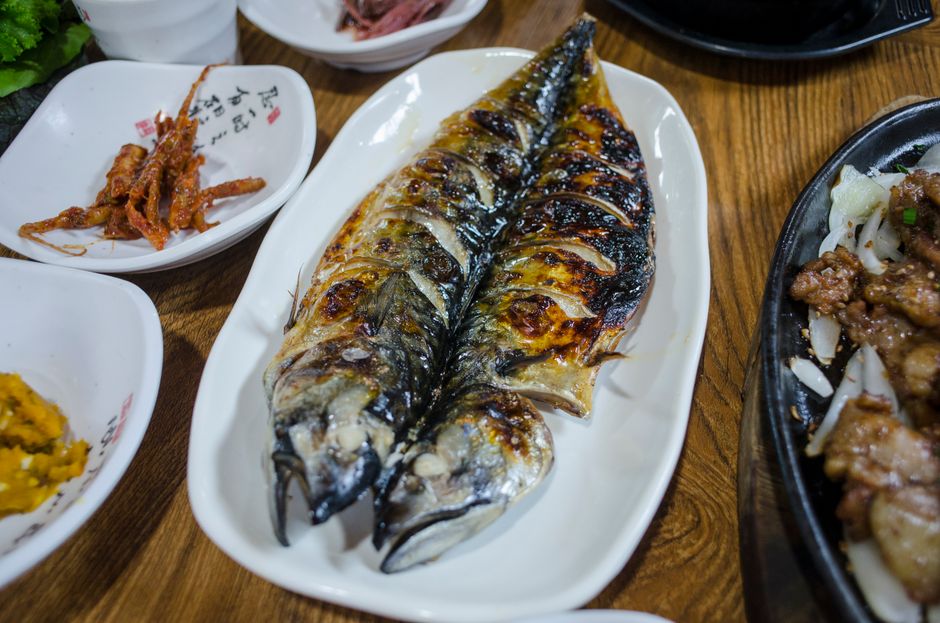
Grilling over an open flame is said to be the most widely known way to enjoy dried okdom. The key is said to be searing the outside golden while keeping the inside moist, and grilled that way, okdom's clean yet subtly savory flavor is said to come through even more. Press the flesh lightly with chopsticks and it's said to separate softly along its grain, and plenty of people are said to love laying that flaked meat over a bowl of hot rice. It's often grilled with little to no seasoning, so tasting the fish's own natural flavor is named as one of the charms of grilled okdom. Its bones are said to be relatively soft and not too difficult to pick through, though it's still widely seen as a fish best enjoyed slowly, without rushing.
Okdom Soup and the Ancestral Table, Why It's Long Been Prized
Okdom is said to be enjoyed in soup just as often as grilled. In particular, okdom soup simmered with plenty of seaweed is known for its milky, refreshing broth. Okdom's clean, savory flavor is said to blend with the seaweed's refreshing taste, resulting in something deep without being sharp or heavy. Because the broth is so mild, it's said to be considered a soup that settles the stomach gently, often sought out when someone is feeling run down or wants to recover their strength. It might look like a simple combination of fish broth and seaweed, but because okdom itself has long been held in such high regard, even a single bowl of this soup is said to have been treated as something special.
Several reasons are said to explain why okdom has long been considered a precious fish. It's not caught in large quantities, and cleaning and drying it takes considerable effort, so it was never really an everyday fish, according to tradition. That's said to be part of why the custom of placing okdom on the ancestral memorial table took hold in Jeju, carrying the meaning of offering a carefully prepared, valued fish to one's ancestors. Even today, it's said to be a common sight to see Jeju locals picking up okdom ahead of a holiday or memorial rite. For a visitor, it might just look like a delicious fish, but woven into it is said to be generations of care and meaning carried by the people of Jeju.

GYULI's Tip · Flavor and texture are said to shift depending on how dried and how large the okdom is, so if it's your first time, it doesn't hurt to ask how dried the one you're picking is. It can have small bones, so it's best to chew slowly.