Everyone's Heard of Jeju's Haenyeo — But Do You Know the Life in Every Breath?
a life carried on for generations
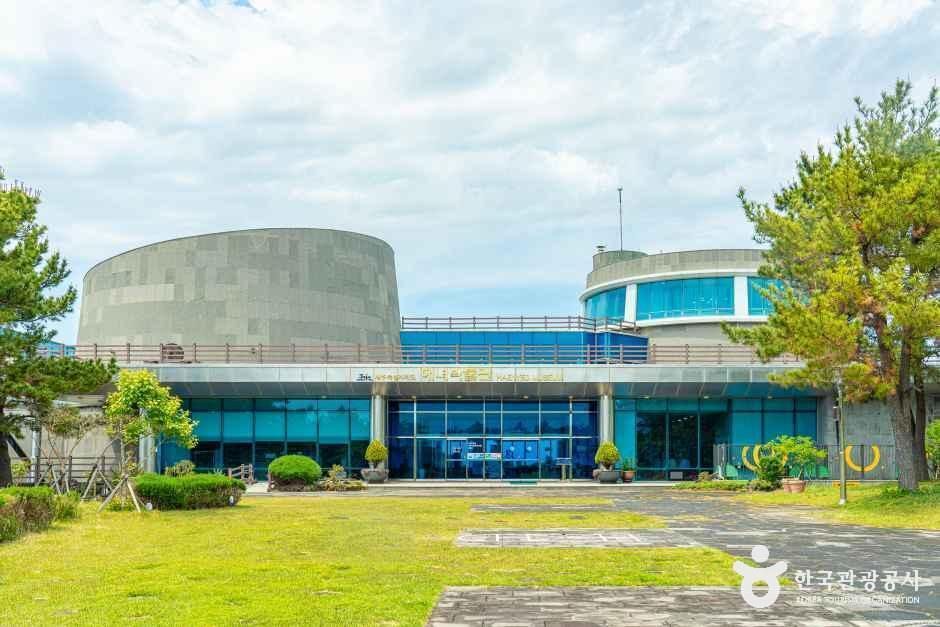
When people think of Jeju, oreum, black pork, and turquoise water usually come to mind first. But surprisingly few visitors know much about the people who've lived that sea with their own bodies — the haenyeo, Jeju's women divers. With no oxygen tank at all, they plunge into the sea barehanded to gather abalone, conch, and seaweed by hand — a way of life said to have been passed down in Jeju for hundreds of years. Today GYULI wants to walk you through haenyeo culture, and through the Jeju Haenyeo Museum in Gujwa-eup, Jeju City, where that life has been carefully recorded.
Haenyeo, Who Enter the Sea on a Single Breath
Haenyeo are divers who go into the sea without modern equipment like oxygen tanks or fins, gathering abalone, conch, seaweed, and sea urchin by hand, on a single held breath. The sound they let out when they surface after working underwater is called sumbisori — and I've always loved the idea that this one sound carries a lifetime of conversation between the haenyeo and the sea. Diving deep into the water and coming back up with nothing but your own body should tell you just how demanding this work is, even without further explanation. And yet this tradition is said to have been passed down in Jeju for a very long time, mother to daughter and daughter to daughter again — every time I hear that, something in my chest tightens a little.
Going into the sea means going in with half your life on the line. And these grandmothers have done it for decades.
— 🍊 GYULIThis haenyeo diving culture is said to have been inscribed as a UNESCO Intangible Cultural Heritage. Rather than state the exact year here, I'd rather say carefully that it's "said to have been inscribed." What matters more than the exact date, I think, is that the haenyeo way of life itself has been recognized as heritage worth protecting on a global scale. Facing the sea with nothing but their own bodies, this way of life has come to be valued as more than just a fishing technique — it's a community culture and a way of living.
The Jeju Haenyeo Museum in Gujwa-eup, Where That Life Is Recorded
There's a place where you can take a slow, close look at the history and life of these divers all in one spot: the Jeju Haenyeo Museum, located in Gujwa-eup, Jeju City. It's said to hold the tools haenyeo actually used while diving — things like goggles, taewak floats, and mangsari nets — alongside exhibits showing what their daily lives looked like. Being able to see, up close, the actual tools these women held in their hands, rather than just photos or footage, might be the museum's greatest strength. Gujwa-eup is said to be an area where Jeju's haenyeo culture runs especially deep, which makes it feel all the more meaningful that a museum like this stands there.
Fewer in Number, Yet the Diving Continues
Even as this culture has been recognized as precious heritage, word has it that the number of haenyeo is shrinking every year. The work itself is so physically demanding that few young people are stepping in to take it up, and many of those still active today are said to be elderly. I'd rather not state an exact number of how many haenyeo are active right now — that's not something I want to pin down here. What is clear is that concern over these dwindling numbers comes up often within Jeju itself. So I think of this diving culture as a living heritage, one that continues, with difficulty, even at this very moment.
As a tourist in Jeju, it's easy to brush past haenyeo as just the people selling seafood at the market, or a diving demonstration staged like a show. But once you know that every fingertip, every breath, carries decades of a life lived this way, Jeju's sea starts to look different. If you have the time, GYULI recommends stopping by the Jeju Haenyeo Museum in Gujwa-eup and taking a slow look at that recorded life.
GYULI's Tip · The Jeju Haenyeo Museum is in Gujwa-eup, Jeju City, and is said to be more convenient to reach by car than by public transit. Diving demonstrations or hands-on programs may only run on certain days, so it's a good idea to check the schedule before you visit.